Shopping cart is empty.
Total (USD):$10.00
Checkout
 $ USD
$ USD
A Clous-de-Paris Micro-Rotor Dress Watch Reimagined for Modern Collectors - Baltany S4099
In December 2025, we reached an important milestone in our brand journey with the official launch of the Baltany S4099 Clous-de-Paris Edition Micro-Rotor Watch on Kickstarter.
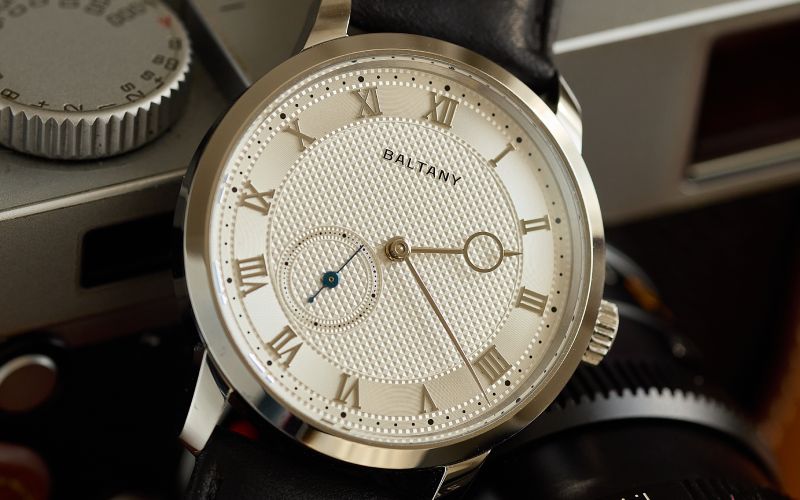
The release of this watch marks not only Baltany’s exploration into the world of refined classical watchmaking, but also reflects our core vision: to reinterpret the aesthetics of vintage timepieces through modern craftsmanship, and to help bridge the gap between traditional Haute Horlogerie and the broader consumer market. Our goal is to make the pure mechanical beauty of fine watchmaking more accessible to a wider community of watch enthusiasts.
Today, we are delighted to announce that the S4099 is now officially available for public sale on the Baltany official website.
In this article, we will take you through the Baltany S4099 in detail, exploring its mechanical heritage, the architectural beauty of its dial, the craftsmanship behind its metallurgical finishing, and the overall philosophy behind its visual design. Through these perspectives, we hope to reveal the subtle details and unique charm that define this watch.
1. Tracing the Beauty of Mechanics: The Birth and Engineering Value of the Micro-Rotor
To truly understand the core appeal of the Baltany S4099, it is worth first looking back at the development of the micro-rotor mechanism. In the long history of mechanical watchmaking, the micro-rotor is far more than just an automatic winding system. It represents an uncompromising engineering statement from watchmakers in pursuit of both ultra-thin construction and mechanical beauty.
In traditional automatic watches, the central rotor is the most widely used energy-harvesting system. By using a large oscillating weight that spans much of the movement’s radius, it converts the motion of the wearer’s wrist into torque, winding the mainspring barrel.
However, this classic design has always carried certain physical and aesthetic compromises. On one hand, the rotor must be mounted above the base movement, inevitably increasing the thickness of both the movement and the watch as a whole. On the other hand, the large rotor often covers nearly half of the movement’s caseback view, partially hiding the intricate gear train, escapement, and decorative finishing of the bridges. For enthusiasts who enjoy observing the mechanics of a watch in motion, this naturally reduces part of the visual pleasure.
It was precisely to overcome this limitation that the concept of the micro-rotor was born. Its core design idea is remarkably clever: instead of placing a full-sized rotor on top of the movement, a smaller oscillating weight is integrated directly into the movement’s bridge structure.
1.1 A Historical Turning Point in 1958
Looking back to 1958, micro-rotor technology reached a historic turning point. At that time, two renowned Swiss watchmaking companies, almost independently of one another, introduced this revolutionary concept. Büren Watch Company launched its “Planetary” micro-rotor movement, while Universal Genève registered the “Microtor” trademark and released the famous Caliber 1-69, followed by the Caliber 215.
Universal Genève would later place this movement inside the now-iconic Polerouter, designed by the legendary Gérald Genta. This combination became one of the most celebrated chapters in the history of micro-rotor watchmaking.
| Period | Brand / Manufacturer | Iconic Micro-Rotor Movement | Technical and Historical Significance |
|---|---|---|---|
| 1958 | Universal Genève | Caliber 1-69 / Caliber 215 | Among the first to commercialize the micro-rotor concept under the “Microtor” name, later used in the Polerouter. |
| 1958 | Büren Watch Co. | “Planetary” / Caliber 1281 | A parallel pioneer in micro-rotor development, later forming part of the technical foundation for the famous Chronomatic automatic chronograph movement. |
| 1960 | Piaget | Caliber 12P | Pushed micro-rotor technology toward extreme thinness, creating one of the world’s thinnest automatic movements of its time at approximately 2.3 mm. |
| 1977 | Patek Philippe | Caliber 240 | Introduced during the height of the quartz crisis, with a thickness of only approximately 2.53 mm, establishing the micro-rotor as a legitimate mechanism in high-end watchmaking. |
| 1996 | Chopard | Caliber L.U.C 96 | A rare bidirectional-winding micro-rotor movement, representing the modern Haute Horlogerie pursuit of technical refinement and finishing quality. |
1.2 The Physical Challenges and Haute Horlogerie Character of the Micro-Rotor
Although the micro-rotor offers clear advantages in reducing movement thickness and improving visual appeal, it remains relatively rare even today, and is still largely associated with the realm of Haute Horlogerie, seen in brands such as Patek Philippe, Chopard, Bulgari, and Parmigiani. The fundamental reason lies in the significant engineering and physical challenges behind this mechanism.
According to the physics formula for moment of inertia, I = ∫ r² dm, when mass distribution remains the same, the smaller the radius of a rotating body, the more its moment of inertia and generated torque decrease on a squared scale. Because the micro-rotor is much smaller in diameter, it is naturally less efficient than a traditional central rotor at harvesting subtle wrist movements.
To compensate for this loss of kinetic efficiency, watchmaking engineers must take more demanding measures. First, they often use dense and costly heavy metals, such as tungsten alloy, 22K gold, or even platinum, to increase the rotor’s localized mass. Second, they need to design an exceptionally precise unidirectional or bidirectional winding system to maximize the efficiency of energy transmission.
By equipping the S4099 with a micro-rotor movement, Baltany taps into one of the most fascinating mechanical traditions in classical watchmaking. This uncommon structure not only allows the watch case to remain impressively slim, but also greatly enhances the visual experience through the exhibition caseback.
Beneath the sapphire crystal caseback, the wearer can clearly observe the breathing motion of the hairspring, the precise engagement of the gear train, and the lively rotation of the micro-rotor. This kind of pure mechanical beauty is something that a conventional central-rotor movement can rarely present in the same open and unobstructed way.
2. Breguet 7147-Inspired Reconstruction and a Structure-Driven Dial Layout
The Baltany S4099 was not born out of nowhere. At the beginning of its development, we looked with great respect toward one of the benchmarks of contemporary high-end dress watches: the Breguet Classique 7147.
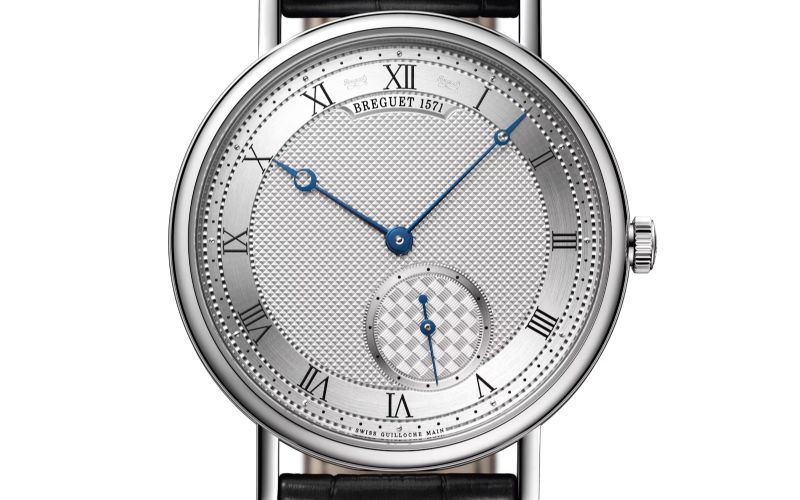
Facing such an icon of classical watchmaking, we understood that a true tribute should never stop at surface-level imitation or simple replication. Instead, Baltany chose a more challenging path. We carefully deconstructed Breguet’s captivating classical aesthetic language and deeply integrated it with the strict physical architecture of the S4099’s micro-rotor movement.
This is not merely an evolution in appearance. It is an aesthetic reconstruction with a strong sense of philosophy, built around the idea that the internal mechanical structure determines the external visual layout.
2.1 The Classical Code of the Breguet Classique 7147
The Breguet Classique 7147 can be regarded as a perfect textbook example of a classical dress watch. It is powered by the ultra-thin Cal. 502.3SD automatic movement, measuring only 2.4 mm in thickness, and likewise features an off-centred oscillating weight.
In terms of dial construction, the guilloché version of the 7147 presents an exceptionally luxurious division of textures. The central dial area is extensively decorated with the Clous de Paris pattern, while the off-centred small seconds subdial is finished with a basket-weave motif. Around the outer edge, a brushed chapter ring is paired with railway-style minute tracks and Breguet’s signature Roman numeral hour markers.
The most recognizable feature of the 7147 is its off-centred small seconds positioned at 5 o’clock. This asymmetric visual focal point breaks away from the rigid, absolute symmetry often associated with traditional dress watches, creating a lively sense of mechanical charm inherited from the pocket-watch era.
2.2 An Off-Centred Small Seconds Layout Determined by the Movement Structure
When designing the S4099, we did not simply replicate the symmetrical dial layout often seen in traditional dress watches. Instead, we re-planned the dial architecture according to the actual structure of the HZ5000A micro-rotor movement.
The HZ5000A is a micro-rotor movement developed by Hangzhou Watch Factory. Because the movement needs to accommodate a relatively large micro-rotor within a limited mainplate space, its gear train layout differs from that of more common automatic movements. The small seconds wheel is not positioned at the traditional 6 o’clock location, but naturally falls toward the lower-left area of the movement. Therefore, the S4099 places its small seconds subdial at around the 7–8 o’clock position. This was not done simply to create visual difference, but as a direct response to the movement’s structure.
Rather than forcing the display into a conventional symmetrical arrangement, we preserved the off-centred character created by the movement itself. With the small seconds placed at the lower left, the dial gains a subtle sense of asymmetry, while also evoking the visual spirit of classical pocket watches and early dress watches.
Compared with a fully centred traditional layout, this off-centred small seconds design better highlights the unique nature of the HZ5000A micro-rotor movement. It is both a structural result and an important part of the S4099’s dial identity.
3. A Miniature Architecture on the Dial: The Evolution and Recreation of Clous de Paris
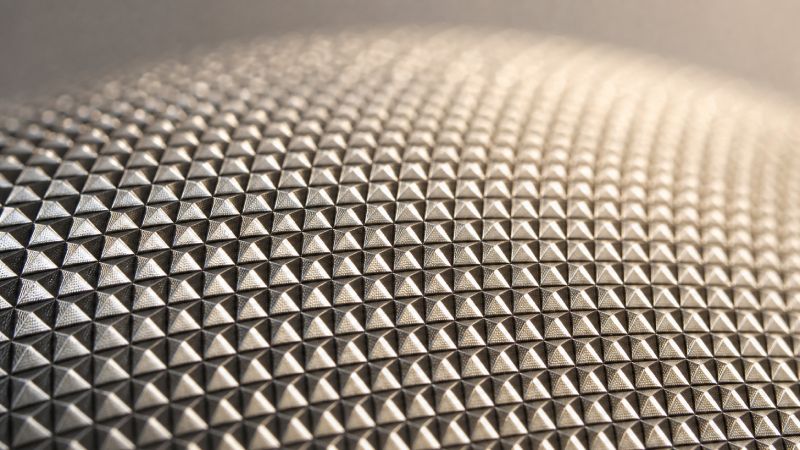
After establishing the off-centred relationship between the movement and the dial layout, the dial texture became the key element that would define the final character of the watch.
For the Baltany S4099, we chose one of the most iconic visual signatures in fine watchmaking: Clous de Paris. More importantly, through the precise application of modern CNC forming technology, we were able to bring this traditional high-end decorative craft remarkably close to its classical expression, translating a once highly specialized artisanal technique into a more accessible yet carefully executed modern form.
3.1 The Geometric Beauty Shaped by Centuries of Time
Clous de Paris, often referred to in English as the hobnail pattern, is one of the most famous and representative geometric motifs in the art of watchmaking guilloché. Its history runs deep, dating back to the 16th and 17th centuries, when it was first used to decorate softer materials such as wood and ivory. It later found its way onto the metal surfaces of silverware, gold objects, and scientific instruments.
By the late 18th century, the master watchmaker Abraham-Louis Breguet was among the first to introduce guilloché decoration to pocket watch dials. He cleverly used its complex optical refraction to reduce dial glare, greatly improving the legibility of the hands.
From a microscopic geometric perspective, Clous de Paris is composed of countless tiny four-sided pyramids, each connected at the base and arranged in an extremely precise matrix of straight and intersecting lines. This refined structure is often praised as a form of “miniature architecture” on the dial, as it transforms a flat two-dimensional surface into a deeply dimensional three-dimensional space.
When light falls across the sloped surfaces of these tiny “pyramids,” it creates a fascinating interplay of highlights, shadows, and soft reflections. As the wrist moves, or as the viewing angle and ambient light subtly change, the entire dial comes alive with a dynamic rhythm of light and shade, reminiscent of the façade of a classical building.
Through the historical legacy of maisons such as Patek Philippe, Audemars Piguet, and Breguet, Clous de Paris has long transcended simple decoration. It has become an enduring aesthetic symbol of fine watchmaking.
Today, with the Baltany S4099, we aim to bring this century-old play of light, shadow, and architectural beauty to the wrist of every enthusiast who appreciates the art of mechanical watchmaking.
3.2 A Three-Dimensional Architecture of Multi-Layered Tracks and Roman Numerals
To further enrich the sense of depth on the dial, the S4099 adopts a multi-layered track structure. The dial is not treated as a simple flat surface, but as a stepped visual system composed of an outer minute track, a dotted scale ring, and distinct textured sections across the inner and outer areas.
Viewed up close, this layered construction reveals a wealth of fine detail. Yet from a normal viewing distance, it still maintains excellent clarity and legibility.
In addition, the hour markers are not ordinary printed indices or simple baton markers. Instead, the S4099 features applied vintage-style Roman numeral indices. Roman numerals naturally carry a strong sense of classicism and formality, while their three-dimensional metallic finish creates a clear visual hierarchy against the softly reflective Clous de Paris texture beneath.
Together, these details further elevate the watch’s refined dress-watch character.
4. Metallurgy and Forming at the Microscopic Scale: A Deep Dive into the Hands and Seconds Hand
If the dial is the stage of a watch, then the hands are the leading actors upon it.
For the S4099, we applied a level of complexity to the hand-making process that goes beyond what is commonly seen in watches at this price point. Our goal was to recreate the elegance of classical watchmaking within the smallest visible details, bringing depth, refinement, and craftsmanship to every movement across the dial.
4.1 Multi-Stage Oil-Press Forming Process
Most hands found on entry-level watches are made from thin metal sheets through a simple one-step flat stamping process. The result is often a hand that feels visually thin and lifeless. Because the surface is completely flat, it can only reflect light from a very narrow angle, appearing dull under most lighting conditions and lacking any real sense of depth.
For the Baltany S4099, the main hands are produced using a much more demanding multi-stage oil-press forming process. In metalworking, this is similar to multi-station cold forming. Instead of being cut or stamped into shape in a single step, the metal blank passes through a series of precision dies, gradually shaped through multiple intermediate strokes.
Under extremely high hydraulic pressure, the metal undergoes controlled plastic deformation. The final hand is not only formed into a slender conical profile, but also gains a refined micro-arched contour across its surface.
This subtle arched structure is highly significant from an optical perspective. It transforms the hand from a single flat reflective surface into a continuous curved plane, allowing it to capture light from multiple angles. As the wrist moves, one side of the hand catches the highlight while the other falls into shadow, creating a rich “half-light, half-shadow” effect.
This three-dimensional play of reflection greatly enhances the S4099’s vintage luxury character and gives the hands a level of refinement rarely seen in watches at this price point.
5. Strict Factory 5-Position Calibration
For a micro-rotor movement, one of the biggest challenges often lies in accuracy consistency. Due to the relatively limited torque output of the smaller rotor, the movement can be more sensitive to changes in mainspring torque and shifts in gravitational position.
To address this at the quality-control level, Baltany introduced a higher standard of precision management for the S4099: factory 5-position calibration.
Under the influence of gravity, the contact area and friction between the balance staff, shock absorber, and jewel bearings can vary depending on the movement’s position in space. This is what is commonly known in mechanical watches as positional variation.
Many entry-level mechanical watches are typically tested only in one or two basic positions, such as dial-up or vertical. The S4099, however, follows a more rigorous testing logic inspired by high-grade chronometer standards, with calibration checks performed in five key positions before leaving the factory:
| Testing Position | Simulated Wearing Scenario | Physical Friction State |
|---|---|---|
| Dial Up | The watch rests flat on a table. | The tip of the balance staff acts as a point of contact, creating minimal friction and usually resulting in the highest amplitude. |
| Dial Down | The watch is placed face down. | The opposite pivot of the balance staff becomes the point of contact, helping verify consistency between the upper and lower shock absorbers. |
| Crown Up | The wearer raises the arm horizontally toward the chest. | The side of the balance staff creates line contact with the jewel bearing, increasing friction and reducing amplitude. |
| Crown Down | The wearer’s arm hangs naturally downward, one of the most common real-life positions. | Side contact changes the gravitational load and helps test energy transmission between the pallet fork and balance in a natural wearing position. |
| Crown Left | The wearer raises and tilts the wrist to read the time. | This is also a line-contact state, helping evaluate the influence of hairspring eccentricity on isochronism. |
After each S4099 movement undergoes amplitude checks, beat error inspection, and rate adjustment across these five positions, its factory accuracy is strictly controlled within a daily deviation range of -10 to +20 seconds per day.
6. Surface Hardening Technology
Traditional vintage watches are undeniably beautiful, but the Vickers hardness of standard 316L stainless steel is usually only around HV 200. In daily wear, even friction from clothing or a light knock against a desk can easily leave fine hairline scratches.
To achieve the goal of “Everyday durability and lasting sheen,” Baltany applies an advanced scratch-resistant surface hardening treatment to the stainless steel version of the S4099. This transparent, ultra-hard protective layer greatly improves scratch resistance without altering the cool brushed and polished texture of the steel case. As a result, the watch can better maintain its clean, lasting sheen through long-term daily wear. The stainless steel version presents a calm, rational, and everyday-oriented mechanical aesthetic.
For the Vintage Gold version, we also use 316L stainless steel as the base material, finished with a richly nostalgic vintage gold PVD coating. This version is positioned around the idea of “sophisticated warmth and timeless character.” The vintage gold coating also provides enhanced surface hardness, improving durability while preserving its refined appearance.
The warm gold case creates a classic contrast with the heat-blued small seconds hand on the dial, bringing together warmth and coolness in a beautifully balanced way. The result is a more elegant, graceful, and elevated expression, making it an excellent choice for refined business occasions.
Conclusion
Looking at the Baltany S4099 Clous de Paris Micro-Rotor Watch from the perspectives of movement architecture, dial craftsmanship, material application, and classical aesthetics, we hope it is not simply a piece following the vintage trend, but a serious attempt to reinterpret the language of classic dress watches through modern manufacturing.
In terms of design philosophy, the S4099 draws inspiration from classic dress watches such as the Breguet Classique 7147. However, we did not want it to remain only a surface-level tribute. Because the HZ5000A micro-rotor movement has a relatively unique transmission structure, the small seconds naturally falls around the 7–8 o’clock position. For us, this layout was not created merely to look different, but to allow the movement structure and dial design to come together naturally, forming a character distinct from conventional small-seconds dress watches.
In terms of manufacturing, the S4099 also reflects Baltany’s pursuit of refined detail. The Clous de Paris dial is formed using precise CNC tooling, allowing us to present light and shadow effects close to traditional guilloché texture within a reasonable cost range. The micro-arched hands are shaped through a multi-stage forming process, giving the dial greater dimensionality from different angles. The independently heat-blued seconds hand adds a touch of warmth from traditional watchmaking. At the same time, every watch undergoes factory 5-position calibration, helping it deliver more stable and reliable timekeeping in daily wear.
The 38 mm case, slim wearing profile, surface hardening treatment, and double-domed sapphire crystal are modern practical considerations we added beyond the vintage aesthetics. We want the S4099 not only to look beautiful in photos, but also to be truly suitable for daily wear, standing up to time and real-life use.
Of course, the S4099 is not intended to replace true high-end watchmaking. Instead, we hope it can become a watch that allows more enthusiasts to experience classical watchmaking elements such as the micro-rotor movement, Clous de Paris texture, small seconds layout, and heat-blued hand. It preserves the elegant proportions of a vintage dress watch while incorporating the stability and wearability brought by modern manufacturing.
Today, as vintage dress watches are once again receiving renewed attention, we hope the Baltany S4099 can offer lovers of classical mechanical aesthetics a choice that is easier to own, yet still worth appreciating in detail.
Discover the Baltany S4099
If you appreciate classical dress-watch design, micro-rotor movements, Clous de Paris dial texture, and the quiet elegance of traditional watchmaking, the Baltany S4099 is made for you.
Explore the S4099 collection and experience a refined mechanical watch that blends vintage inspiration with modern craftsmanship.
Shop the Baltany S4099 NowRead More
- Breaking the Circle: The Baltany S098 and the Art of Asymmetric Time
- Baltany S101: The Art of Subtlety – Hidden Details That Elevate the New Dress Watch
- A Comprehensive Guide to Military Style Watches: History, Features, and the Best Picks
- Baltany 36mm dress watches pay tribute to Rolex Datejust
- Baltany Chronograph Review and Microbrand Chronograph Selection Guide
- Baltany launches first affordable GMT watches S6073
- 24-Hour Watches: Blending Military Time with Style and Function